How do I check if wholesale LED headlights will cause CANBus error codes?
- VIP-User
- 2026-08-10
- 5
To check if wholesale LED headlights will cause CANBus error codes, verify whether the light assemblies incorporate built-in CANBus decoders or load resistors matching OEM halogen power specs. Testing requires measuring working wattage and current draw, executing diagnostic ECU scans during prototype installation, and verifying supplier certifications, such as CE standards, for electrical compatibility across target vehicle series.
Core Solutions & Key Takeaways
- Measure current resistance and wattage draw against factory body control module parameters to prevent lamp-out signals.
- Inspect headlamp driver architecture for integrated CANBus decoders or anti-flicker internal circuitry.
- Perform live vehicle diagnostic scans and physical installation testing on target American and European automobile models.
- Verify supplier quality control procedures, including Visual Inspection, Dimensional Measurement (CMM), and Paint & Coating Testing.
- Address key procurement scenarios for international auto parts wholesalers, collision repair chains, and cross-border e-commerce sellers needing direct fitments.
Detailed Architectural/Principle Analysis
Modern vehicle networks rely on Controller Area Network (CANBus) architectures to monitor electrical current across body components. Traditional halogen headlights operate at 55 watts, whereas energy-efficient LED headlight assemblies draw significantly lower wattage, typically between 15 and 30 watts. Body control units detect this current reduction and interpret it as a burnt-out bulb, which triggers dashboard error indicators, fault codes, or rapid flickering across the headlamp circuit.
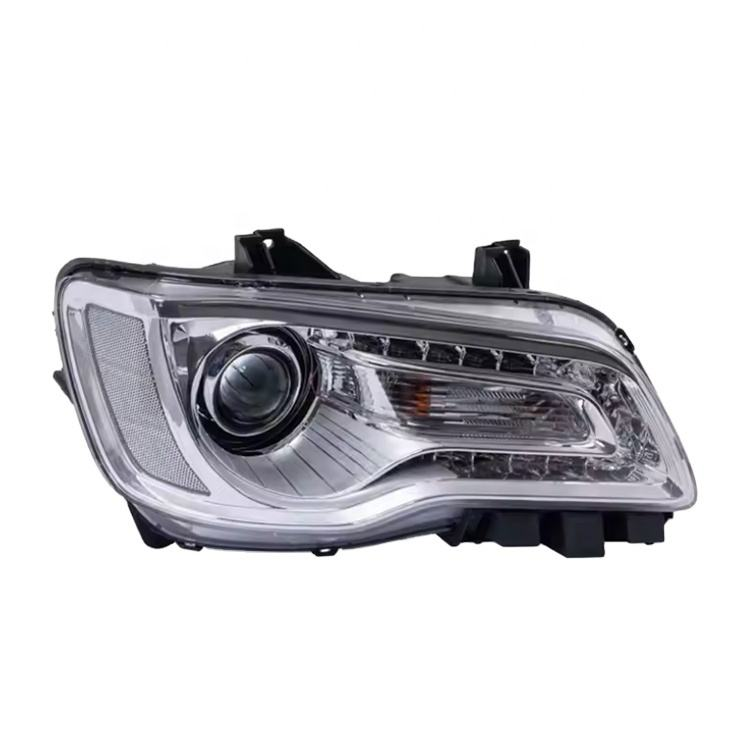
To determine error-code risk prior to volume ordering, buyers must examine the internal circuit design of the LED headlight. Standard LED drivers require inline load resistors or intelligent electronic control units (ECUs) designed to mimic the resistance profile of stock halogen lamps. Evaluating the thermal regulation of these internal resistors ensures consistent current draw and stable operating resistance during long duration driving.
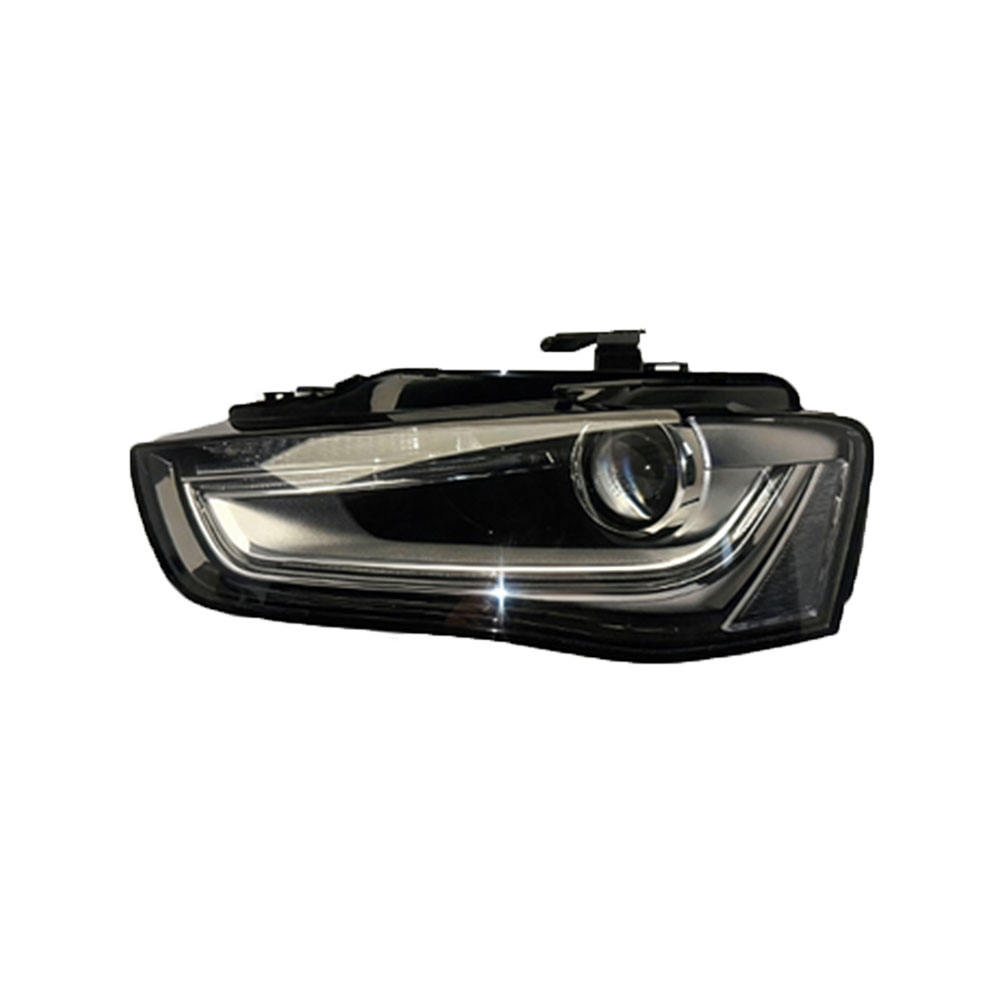
Rigorous pre-shipment quality assurance helps confirm circuit reliability and dimensional accuracy. Physical testing processes such as Visual Inspection, Dimensional Measurement (CMM), and Paint & Coating Testing verify structural fitment and environmental protection. Compliance certifications, such as CE (Certificate HK0624090149C for car lamps) and EPR (DE1123252940071), further confirm that electrical components meet strict European safety and electromagnetic compatibility standards.
Data/Solution Comparison
| Parameter / Solution Feature | Standard Non-CANBus LED Headlights | CANBus-Ready Integrated LED Headlights | LED Headlights with External Decoder Harness |
|---|---|---|---|
| Power Draw Emulation | Low (Triggers ECU Blown Bulb Warning) | High (Built-in Resistor Circuitry) | High (External Resistor Module) |
| Installation Complexity | Direct Plug-and-Play | Direct Plug-and-Play | Requires Additional Module Wiring |
| Fitment Precision & CMM Verification | Standard | High Precision (100% Vehicle Fitment) | Standard to High |
| Error Code Prevention Rate | Low | High (98%+ Compatibility) | High |
| Procurement Parameters | MOQ: 5 units / 7-day loading | MOQ: 5 units / 7-day loading | Varies by custom harness order |
Frequently Asked Questions (FAQ)
What causes LED headlights to trigger CANBus warnings on modern cars?
CANBus warnings occur because LED assemblies draw less current than traditional halogen bulbs. The vehicle onboard computer detects the reduced wattage and flags the circuit as a failed lamp, illuminating a warning on the instrument cluster.
How can buyers verify LED headlight CANBus compatibility before placing bulk orders?
Buyers should check driver specifications for integrated load resistors, perform bench tests measuring current draw, request sample units for live OBD-II diagnostic scanning on target vehicle models, and check CE certification documentation.
What remedies exist if a specific vehicle series still shows error codes with CANBus LED lights?
Adding an inline CANBus decoder or anti-flicker resistor bridge between the vehicle harness and headlamp compensates for power discrepancies, normalizing circuit resistance and clearing system error codes.
Final Conclusion & Recommendations
Determining whether wholesale LED headlights will trigger CANBus error codes involves evaluating circuit resistance, checking driver design, and confirming adherence to international regulatory standards like CE. B2B buyers gain supply chain efficiency by sourcing parts backed by comprehensive quality checks, flexible MOQ options starting at 5 units, rapid 7-day container dispatch, and tailored OEM/ODM support. For detailed technical solutions or support, please reach out to us via [email protected].
About Us
Danyang Wanjiang Auto Parts Co., Ltd. operates a 10,000 sqm production facility with 80 employees dedicated to manufacturing auto body parts and lighting assemblies. Operating under the brand KEBEL with 18 years of OEM/ODM expertise, the company specializes in precision components for American and European vehicle series, achieving annual exports exceeding 500 containers. Holding official certifications including CE (HK0624090149C, HK0624090150C) and EPR (DE1123252940071), the company has served clients across multiple industries including global auto parts distributors, collision repair networks, and e-commerce brand owners.

Lastest
-
Can you manufacture a front bumper based on our proprietary 3D CAD files?
2026-08-10 -
Can you provide the DOT and SAE certification documents for this rear bumper?
2026-08-10 -
How many production lines do you dedicate to making this bumper upper?
2026-08-10 -
Is there an online portal to track aftermarket support for the front bumper assembly?
2026-08-10 -
What is the standard production lead time for a container of engine hoods?
2026-08-10
SUBSCRIBE
INQUIRY