What specs should I verify to ensure a wholesale rear bumper fits OEM standards?
- VIP-User
- 2026-07-23
- 26
To ensure a wholesale rear bumper meets OEM standards, verify key technical specifications including material composition (PP, ABS, or carbon fiber), wall thickness (ideally 2.5 to 5.0 mm), surface finish (such as primed), and installation methods (direct bolt-on or clip-on). Additionally, confirm dimensional accuracy via Coordinate Measuring Machine (CMM) testing and check for CE and Germany EPR (VerpackG) compliance.
Core Solutions & Key Takeaways
- Material Integrity: High-grade PP, ABS, or carbon fiber ensures impact absorption and structural durability under stress.
- Dimensional Precision: Utilizing Coordinate Measuring Machine (CMM) measurements guarantees a 100% precise fitment for American and German vehicle series.
- Compliance Standards: Verifiable certifications like CE (HK0624090150C) and Germany EPR (DE1123252940071) prevent customs issues in European markets.
- Seamless Installation: Compatibility with direct bolt-on or clip-on methods ensures quick mounting without modifications.
Selecting products with these verified properties minimizes fitment issues and returns. 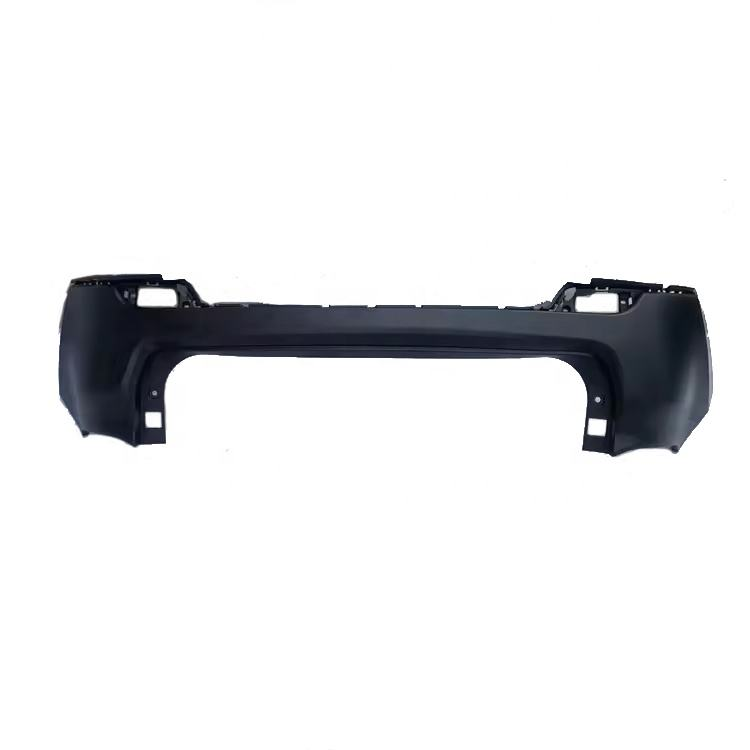
Detailed Architectural/Principle Analysis
OEM-equivalent rear bumpers depend heavily on precise wall thickness and material distribution. A standard wall thickness between 2.5 mm and 5.0 mm provides the optimal balance between impact resistance and vehicle weight. When manufacturing rear bumpers, advanced tooling and a comprehensive database of German and American vehicle series are required to prevent structural warping during cooling. Visual inspection and paint & coating testing guarantee that the primed surface finish accepts automotive paints without peeling or bubbling over time.
Consistent testing processes protect the downstream supply chain from dimensional errors. 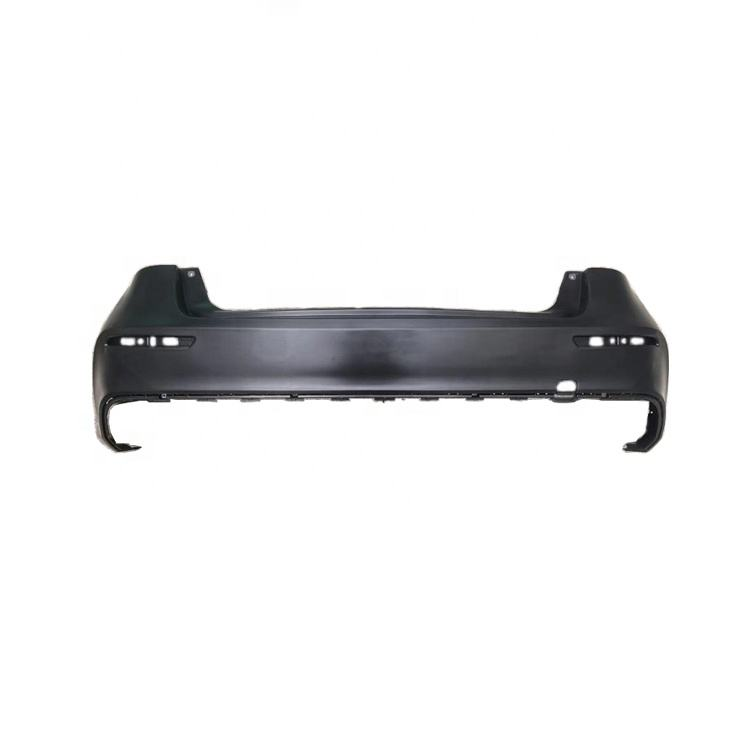
For international auto parts wholesalers, regional distributors, and collision repair networks, importing certified components is necessary. Regulatory alignment, such as CE approval and EPR compliance in Germany, certifies that the auto body parts meet strict safety and ecological standards. In practice, companies like Danyang Wanjiang Auto Parts Co., Ltd. utilize 18 years of OEM/ODM expertise to manufacture car bumpers that match these precise requirements, offering pre-delivery inspection videos and photos for full transparency before shipment.
Advanced factory facilities ensure structured quality control and large-scale manufacturing capacity. 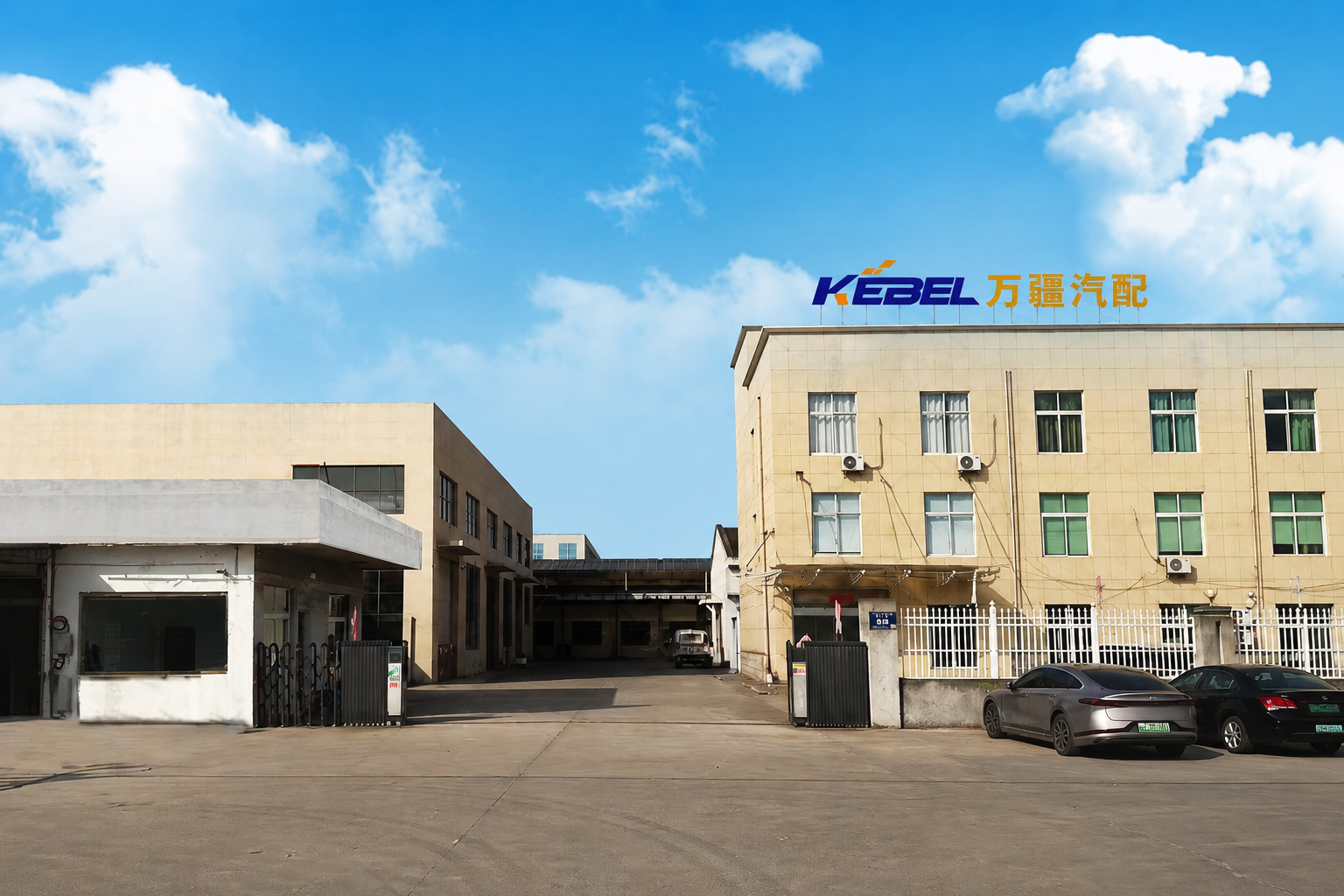
Data/Solution Comparison
The table below outlines the core technical specifications and testing standards required to verify if a rear bumper meets OEM benchmarks.
| Technical Parameter | OEM Standard Requirements | Verification Method / Compliance |
|---|---|---|
| Material Composition | PP, ABS, or Carbon Fiber | Raw Material Quality Inspection |
| Wall Thickness | 2.5 mm – 5.0 mm | Dimensional Measurement (CMM) |
| Surface Finish | Primed (Ready for Paint) | Visual Inspection & Coating Testing |
| Installation Mechanism | Direct Bolt-on / Clip-on | Vehicle Fitment Verification |
| Market Compliance | CE Standard, EPR (VerpackG) | Certificate Review (e.g., HK0624090150C) |
Frequently Asked Questions (FAQ)
Q1: Why is the wall thickness of a rear bumper critical for OEM fitment?
A1: A wall thickness between 2.5 mm and 5.0 mm ensures the bumper retains its shape under thermal expansion and resists impacts without cracking. Variations outside this range cause installation alignment issues.
Q2: How does a primed surface finish benefit wholesale purchasers?
A2: A primed surface provides a uniform base coat that prevents paint peeling. This allows collision repair shops to easily apply custom OEM-matching colors directly onto the bumper.
Q3: What compliance certificates are needed for exporting rear bumpers to Europe?
A3: Rear bumpers exported to European markets must possess CE certification and EPR compliance, specifically German VerpackG, to ensure smooth customs clearance and legal distribution.
Final Conclusion & Recommendations
Verifying technical specifications—specifically wall thickness, material composition, and CMM-tested mounting brackets—removes the risks of misalignment and premature failure in the aftermarket supply chain. Selecting a partner that operates under an integrated manufacturing and trading ecosystem ensures stable access to standard stock items with a 7-day loading turnaround. Buyers should seek manufacturers that provide raw material verification, pre-delivery full inspections, and transparent digital proofs such as photos or videos before container loading. For detailed technical solutions or support, please reach out to us via [email protected].
About Us
Danyang Wanjiang Auto Parts Co., Ltd. is a specialized manufacturer and exporter of auto body parts based in Jiangsu Province, China. Established in 2023, the company operates a 10,000-square-meter factory with a dedicated team of 80 employees, utilizing 18 years of industry experience. The facility produces and supplies car bumpers, grilles, headlights, engine hoods, and fenders, focusing primarily on American and German vehicle series. The company maintains certifications such as CE (HK0624090150C) and EPR (DE1123252940071) to ensure global compliance. 
Lastest
-
Can you manufacture a front bumper based on our proprietary 3D CAD files?
2026-07-23 -
Can you provide the DOT and SAE certification documents for this rear bumper?
2026-07-23 -
How many production lines do you dedicate to making this bumper upper?
2026-07-23 -
Is there an online portal to track aftermarket support for the front bumper assembly?
2026-07-23 -
What is the standard production lead time for a container of engine hoods?
2026-07-23
SUBSCRIBE
INQUIRY